How to bring a plush character to life on social media
Build social stories around an existing plush or collectible character, with consistent personality, repeatable formats and a focused animation brief.
Make the character recognizable before making more content
To bring a plush character to life on social media, keep its visual identity consistent and give it a repeatable personality in short stories. Start with your approved character and a small set of situations, then review what viewers actually respond to. More posts alone do not prove that a character is building a fan base.
Use product photographs, character sheets and brand guidelines to establish the details that must survive animation: proportions, face, signature colors and familiar accessories. Decide how a physical character translates to movement without making it look like an unrelated redesign.
Choose a behavior that can carry several stories
Write a short personality description that suggests action. A shy character trying to greet a new friend or an enthusiastic collector finding a surprising object can support several small stories. These are illustrative prompts, not descriptions of our clients’ campaigns.
Build a few format ideas around that behavior: an everyday ritual, a friendship moment, a seasonal greeting or a tiny adventure. Each post should work on its own while keeping the same character logic. Avoid relying only on changing costumes or trending audio to make each piece different.
What Chonnasaurus shows, and what it does not
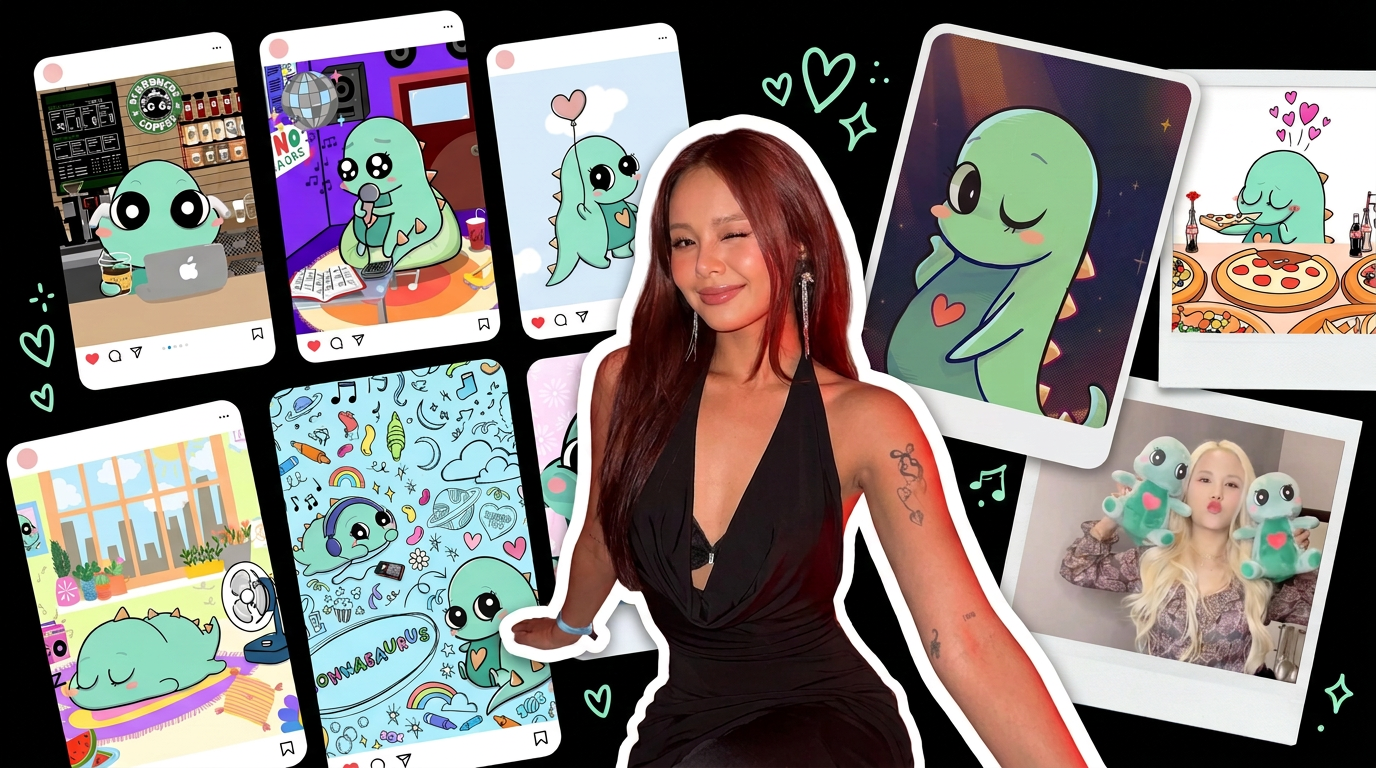
The Monster Library collaborated with SORN to bring her existing Chonnasaurus idea to life for social media. Chonnasaurus also exists as a plush toy. The case shows a shared character identity across social content and physical merchandise.
The supplied October 2026 screenshots show 11.4K followers on the character account and 1.3M on SORN’s Instagram. Those are dated account snapshots, not followers attributed to our work. We also do not claim to have manufactured the plush or measured its sales.
Scope a small production before committing to a calendar
Agree a first set of story concepts, visual references, aspect ratios, animation requirements and review milestones. Include sound, captions and any product details that need approval. Test the character’s performance in one finished piece before extending the same format across a larger calendar.
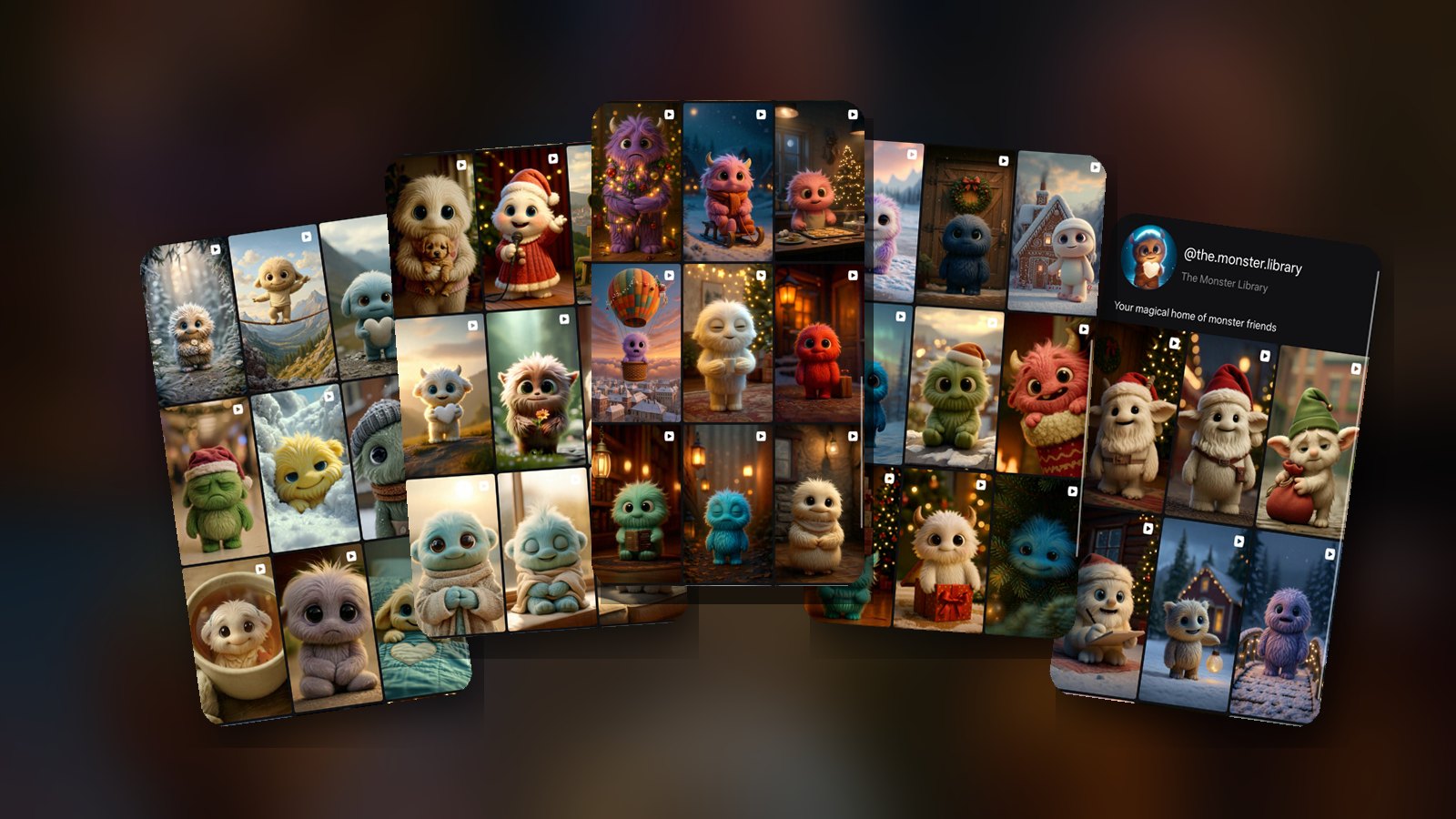
Our Meta creator-app collaboration included 60 pieces of seasonal character content across October, November and December. It is a production example of connected characters across a campaign window, not a toy campaign or a guaranteed posting formula for another brand.
Measure the goal you actually chose
If the goal is story engagement, inspect viewing completion, shares and the substance of comments. If the goal is a product launch, use trackable links and your own product-page and sales data. Keep content engagement separate from commercial outcomes unless you have evidence connecting them.
Bring us your character references, product photographs and the first audience moment you want to create. We can discuss a character-led social production scope, or a larger story direction if your existing character needs more room to grow.